
28 October 2026 8 min read
Leather Jockstrap Care: How to Clean It in 5 Steps
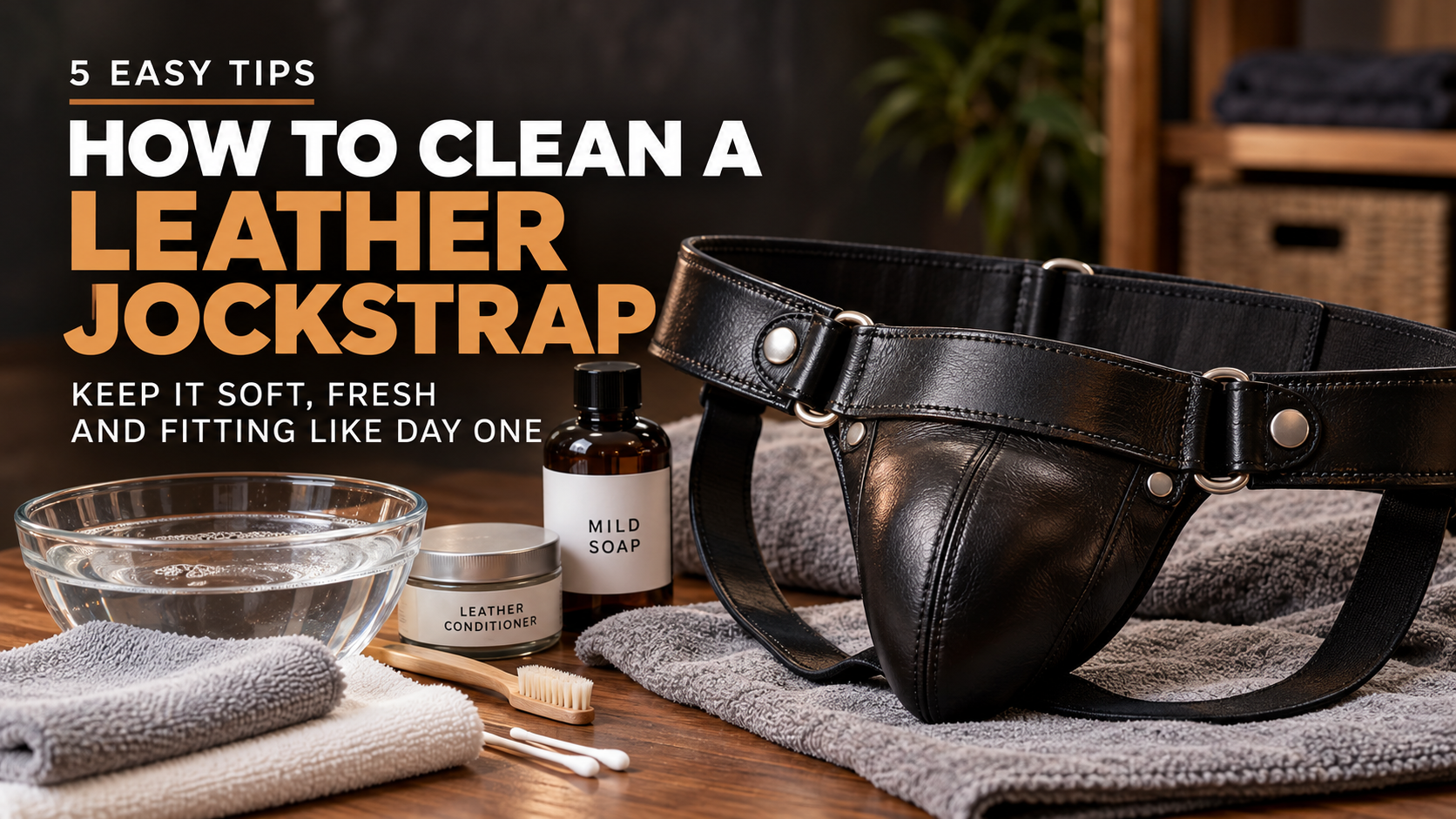
To clean a leather jockstrap, wipe the leather with a damp cloth after every wear, spot clean marks with a little mild soap or saddle soap, and hand wash any fabric or elastic parts on their own. Let it air dry flat away from heat, then rub in a thin coat of leather conditioner. Never machine wash or soak it.
Leather jockstraps sit against warm skin for hours, so they take more sweat than almost any other leather you own. Cleaned the wrong way, the leather turns stiff, cracks along the straps or shrinks out of shape. The five tips below keep your jock soft, fresh and fitting the way it did on day one.
Shopping for a new one? Browse our leather jockstrap collection.
Why a Leather Jockstrap Needs Different Care
Sweat is mostly water, but it also carries salt. When sweat dries inside leather, the salt stays behind, pulls out the natural oils and leaves white tide marks. Over time the leather goes hard and brittle, especially at the waistband and leg straps where it flexes most.
Trapped sweat also feeds odour. Leather is porous, so smells soak in rather than sitting on the surface. Most leather jocks also mix materials: leather straps or a pouch, elastic, stitching and metal snaps, buckles or rings. Each part needs slightly different handling, which is why one wash method never works for the whole piece.
What You Need
Two soft, light-coloured microfibre cloths (dark cloths can transfer dye)
Mild, unscented liquid soap or saddle soap
A small bowl of lukewarm water
A soft toothbrush and a few cotton buds
A water-based leather conditioner made for clothing
A cotton or other breathable storage bag
Skip anything with alcohol, bleach or strong solvents. Household wipes and antibacterial sprays strip leather fast.
Tip 1: Wipe It Down After Every Wear
The easiest clean is the one you do while sweat is still fresh. Dampen a microfibre cloth with plain water, wring it until it is barely wet, and wipe the inside and outside of the leather. This lifts most of the salt before it dries into the grain.
Focus on the inside of the waistband and the leg straps, where skin contact is constant. Then leave the jock somewhere airy for a few hours before you put it away. This one habit prevents most stiffness and smell problems.
Tip 2: Spot Clean Marks With Mild Soap
For marks, sweat lines or a jock that has gone a while without a clean, mix a few drops of mild soap into lukewarm water. Dip a cloth, squeeze it out well, and work over the leather in small circles. With saddle soap, build a thin lather on the cloth rather than on the leather.
Test first on a hidden spot, such as the inside of a strap, and let it dry to check the colour. Use a soft toothbrush or cotton bud along stitching and around snaps, where grime collects. Finish with a second cloth dampened in clean water to lift soap residue, which dries the leather if left on.
Tip 3: Clean the Pouch, Elastic and Hardware Separately
If your jock has a fabric pouch or elastic straps, wash those parts by hand in cool water with a little mild detergent. Hold the leather out of the water as you work, and press the fabric gently rather than wringing it. Wringing stretches elastic and strains the seams where it joins the leather.
Dry metal snaps, buckles and rings with a cloth straight away. Wet hardware can tarnish and leave dark marks on the leather around it. If a snap feels stiff, open and close it a few times once it is dry.
Tip 4: Dry It Slowly and Naturally
Pat the jock with a dry towel to take off excess moisture. Lay it flat on a clean towel, or hang it by the waistband, in a well-ventilated room at normal temperature. A rolled-up cloth inside the pouch helps it keep its shape as it dries.
Keep it away from radiators, hairdryers, tumble dryers and direct sun. Fast heat drying is the main cause of cracked, shrunken leather. Leave it overnight, and wait until the leather no longer feels cool to the touch before you condition or wear it.
Tip 5: Condition, Then Buff
Cleaning removes some of the leather's oils, so put them back. Apply a pea-sized amount of water-based conditioner to a clean cloth and rub it in with light circles, one section at a time. Give extra attention to the parts that bend, such as the straps and waistband edge.
Leave it for about 15 minutes, then buff off any excess with a dry cloth. Too much conditioner leaves leather greasy and attracts dirt, so thin coats work best. Conditioner can darken some leathers slightly, so test it on a hidden spot first, especially on tan or coloured jocks.
How Often Should You Clean a Leather Jockstrap?
Task | How often |
|---|---|
Damp wipe inside and out | After every wear |
Spot clean with mild soap | When marked, or every few wears with heavy use |
Hand wash fabric or elastic parts | When they feel or smell worn |
Condition the leather | Every 1 to 3 months, and after any deep clean |
Check stitching, snaps and elastic | About once a month |
How to Get Rid of a Smell
Most odour comes from sweat left to dry inside the leather. Start with a soap clean (Tip 2), then let the jock air out for a full day somewhere ventilated. A cloth bag of bicarbonate of soda placed beside it in a closed box overnight absorbs lingering smells without touching the leather.
For stubborn odour, wipe the leather lightly with a cloth dampened in equal parts white vinegar and water, then follow with a cloth in plain water. Vinegar dries leather, so always condition afterwards. White or green fuzzy spots mean mould: brush them off outdoors, use the same vinegar wipe, dry fully and condition.
Suede, Nubuck and Patent Leather
Not every leather jock has a smooth finish. Suede and nubuck should not get wet cleaning or conditioner; use a suede brush to lift the nap and a suede eraser on marks. Patent or coated leather only needs a damp wipe and a soft buff, because conditioner will not soak in.
Common Mistakes to Avoid
Machine washing or soaking. Water saturates the leather, and it dries hard and shrunken.
Tumble drying or radiator drying. Heat cracks leather and wears out elastic.
Alcohol wipes, bleach or antibacterial sprays. They strip the finish and dry the leather out.
Kitchen oils like olive or coconut oil. They can go rancid inside the leather and smell worse over time.
Storing it damp or in a plastic bag. Leather needs air, and trapped moisture invites mould.
How to Store a Leather Jockstrap
Store it clean and fully dry in a cotton bag or on a shelf, away from heat and direct sunlight. Lay it flat or hang it by the waistband rather than crushing it in a packed drawer, so the pouch keeps its shape. Give other leather gear a little space too, so everything can breathe.
When to Replace It
A well-kept leather jock lasts for years, but check it regularly. Deep cracks at the strap joins, stitching that has started to pull through, or elastic that no longer springs back all mean it needs repair or replacement. A leatherworker can often replace worn elastic or snaps for less than a new piece costs.
One hygiene note: leather is porous and cannot be sterilised the way silicone can, so a leather jockstrap is best kept as personal gear and not shared.
Frequently Asked Questions
Can you put a leather jockstrap in the washing machine?
No. A washing machine soaks the leather, which then dries stiff, shrinks and can crack. The spin cycle also stretches elastic and strains stitching. Clean the leather by hand with a damp cloth and mild soap, and hand wash any fabric parts on their own in cool water.
Can I use baby wipes on a leather jockstrap?
Only alcohol-free, fragrance-free wipes, and only for a quick wipe between proper cleans. Many wipes contain alcohol or preservatives that dry leather out with repeated use. A microfibre cloth dampened with plain water does the same job without the risk, and costs nothing.
How do I remove white sweat marks from leather?
White marks are dried salt from sweat. Wipe the area with a cloth dampened in lukewarm water and a drop of mild soap, then with plain water to lift the residue. Let it dry naturally and condition it. Heavy marks may need two or three rounds, a day apart.
What conditioner should I use on a leather jockstrap?
Use a water-based conditioner made for leather clothing or accessories, not one meant for furniture, car seats or boots. Clothing conditioners absorb quickly and leave less residue against skin. Test it on a hidden area first, because most conditioners darken leather slightly.
What should I do if my leather jockstrap gets soaked?
Blot it with a towel straight away, without rubbing. Stuff the pouch with a dry cloth to hold its shape, then let it dry at room temperature, away from any heat source. Once it is completely dry, condition it to replace the oils the water pulled out.
How long does a leather jockstrap last?
With regular wiping, occasional deep cleans and conditioning every few months, a genuine leather jockstrap can last for many years. The elastic usually wears out before the leather does, and a leatherworker can often replace it. Neglected leather that dries out with salt can crack within months.
Keep Your Leather Gear in Shape
Caring for a leather jockstrap comes down to a few habits: wipe it after wear, clean it gently, dry it slowly and condition it often. Do that, and the leather softens and moulds to you instead of cracking.
Keep reading
22 October 2026 8 min read
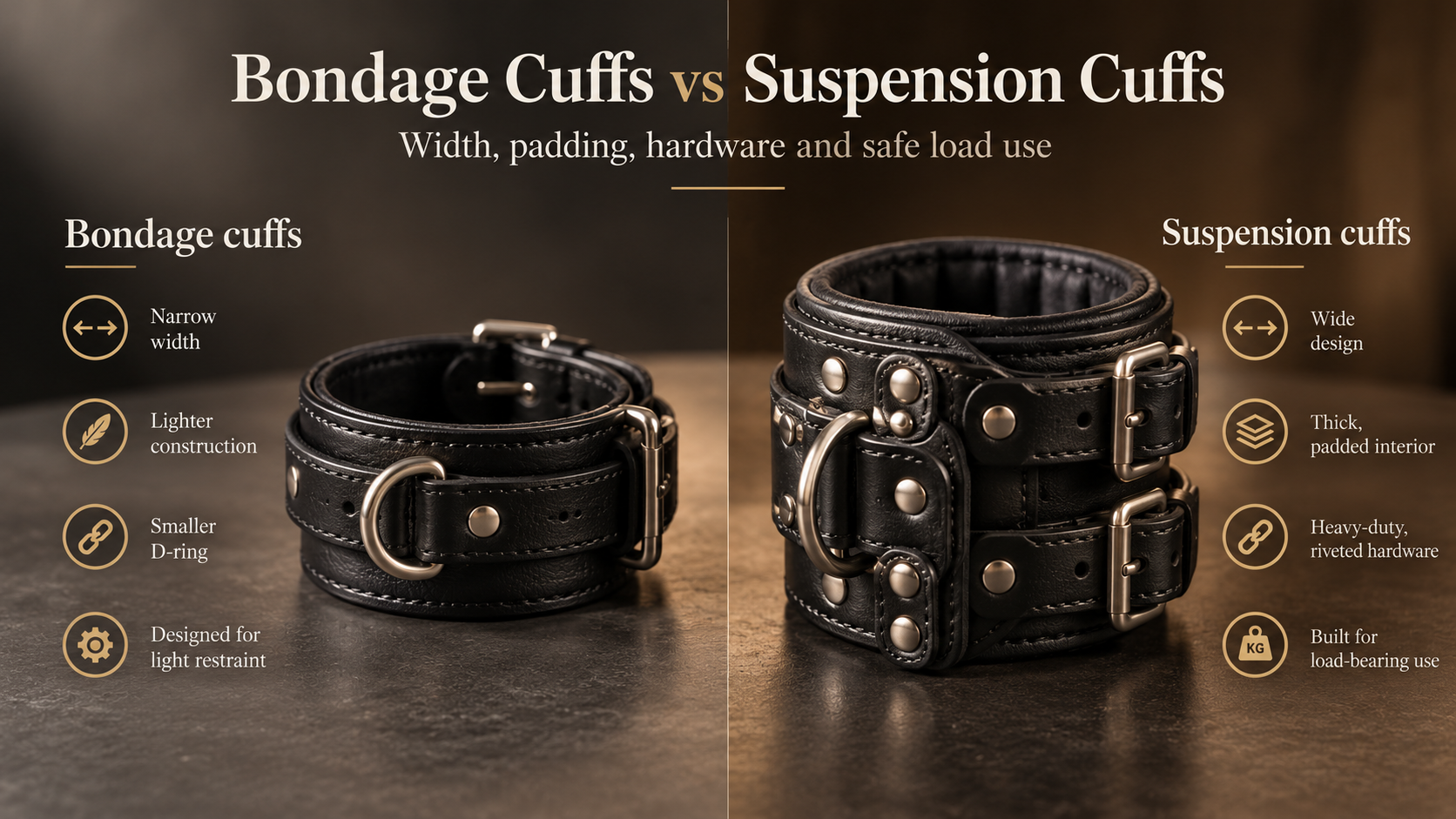
Suspension Cuffs vs Bondage Cuffs
Suspension cuffs are built to carry weight. Normal bondage cuffs are not. A standard bondage cuff holds a wrist or ankle in place for light restraint, such…
Read article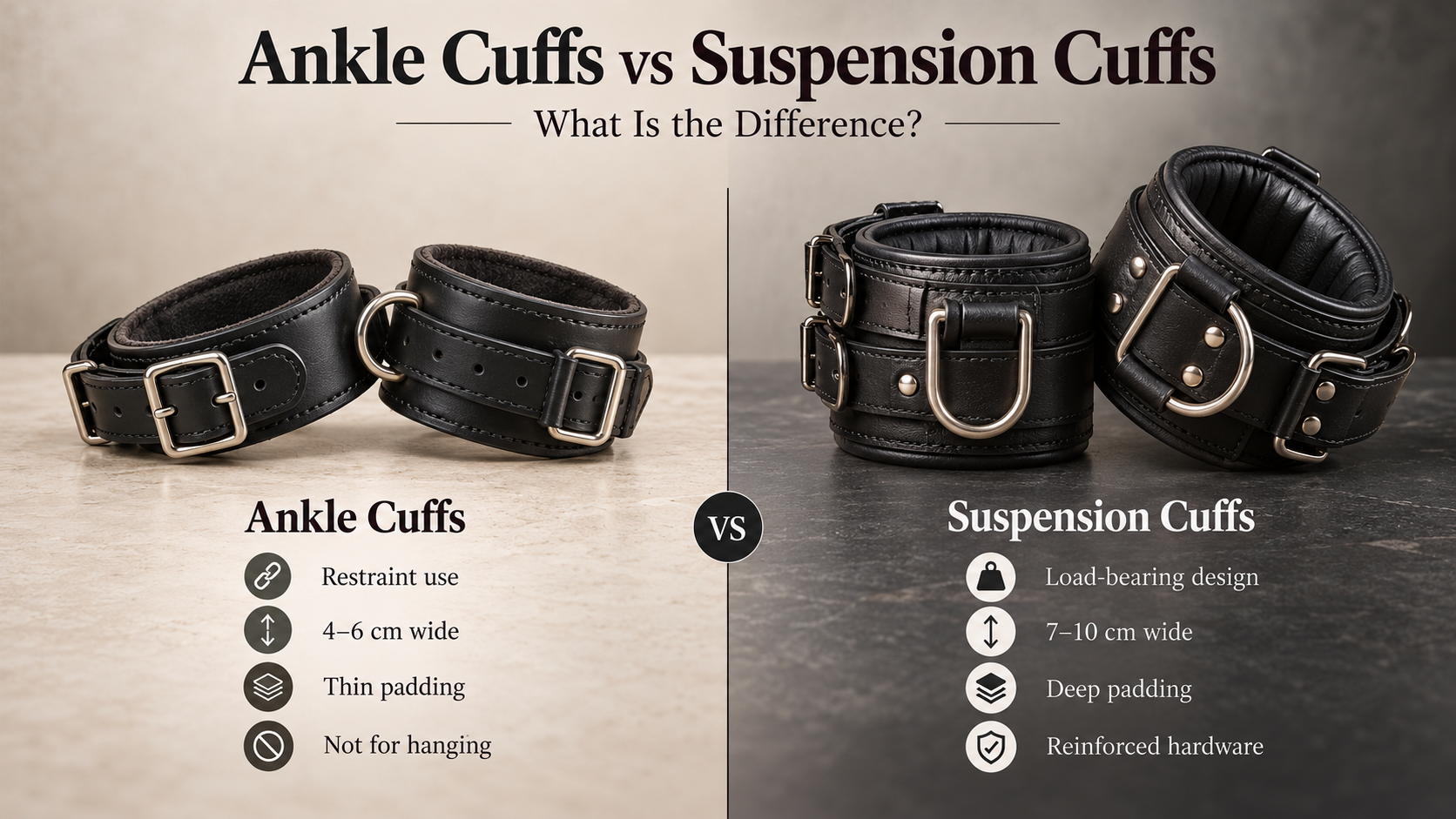
19 October 2026 5 min read
Ankle Cuffs vs Suspension Cuffs
The difference between ankle cuffs and suspension cuffs comes down to load. Ankle cuffs hold the legs in place. Suspension cuffs are built to carry part or…
Read articleTo clean a leather jockstrap, wipe the leather with a damp cloth after every wear, spot clean marks with a little mild soap or saddle soap, and hand wash a…